INTERVIEW - De Forbidden Site à Romaric Sangars : 30 ans de poésie...Français + English

Quel parcours passionnant que celui de Romaric Sangars...Depuis ces années 90 lors desquelles il officia au sein d'un des groupes de Black Metal français les plus originaux qui soient, Forbidden Site, jusqu'à aujourd'hui et sa plume mise au service à la fois de belles pièces de littérature et de magazines liés à l'art et la culture, mais aussi aux opinions (L'incorrect) il n'a cessé d’œuvrer contre l’abêtissement général qui nous envahit. Alors, tandis que certains illettrés se piquent d'histoire en déboulonnant des statues où vont taguer la statue de Jimi Hendrix vu comme un "collabo" des blancs il est plus que temps de se refaire une santé intellectuelle et littéraire. Les livres de Romaric y contribuent grandement. Ne laissez pas l'idiocratie vous pourrir la vie, continuez à écouter de la musique, mais saisissez vous des livres et des idées. Entretien avec l'intéressé...


Romaric Sangars, catholique romain du IIIe millénaire - Causeur

"Un groupe de musique signifiait bien davantage qu’un projet artistique, mais plutôt une espèce de secte, une marge mystique qui se devait de déclarer la guerre au reste du monde" (Romaric Sangars)

Bonjour Romaric, et merci de bien vouloir répondre à mes questions. Nous allons commencer cet entretien en évoquant le groupe de Black Metal culte dans lequel tu étais dans les années 90. Forbidden Site. Peux tu nous raconter un peu comment le groupe s'est formé et ce que vous vouliez en faire ?

Le groupe, du moins, son principe créatif, est véritablement né de ma rencontre avec Arnault Destal, un 31 décembre 1993. Je venais de monter un groupe de metal avec des amis lycéens, dont les orientations étaient encore très peu définies, nous faisions des reprises dans le garage de mes parents et il nous manquait un batteur. Arnault m’avait été indiqué par un ami musicien que nous avions en commun. Dès lors, il s’est produit une évidente alchimie entre nous. Arnault fut immédiatement très enthousiaste quand je lui montrai mes compositions et m’apporta des paroles, comme l’idée du nom du groupe. Il était un peu plus âgé, de deux ans mon aîné, ce qui, à 16 ans est significatif, et était déjà très initié aux genres les plus étranges et les plus radicaux du metal extrême, qui bénéficiaient alors d’un grand bouillonnement. Produire une synthèse unique, voilà quelle fut assez rapidement notre ambition artistique. Il est également vrai qu’à cet âge et étant donné les genres en question, et aussi, j’ajouterai, l’époque qui était la nôtre, un groupe de musique signifiait bien davantage qu’un projet artistique, mais plutôt une espèce de secte, une marge mystique qui se devait de déclarer la guerre au reste du monde.

Vous sortez votre première démo en 1994, soit en pleine vague du Black Metal scandinave. Peux tu nous parler de cette première sortie ?

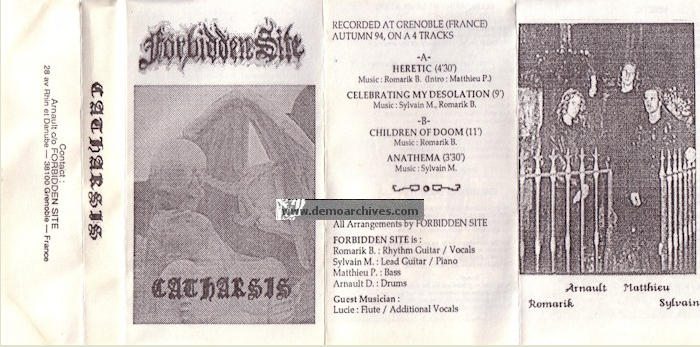
Notre première véritable démo reste pour moi Renaissances noires, qui sort en 96. La démo de 94, Catharsis, représente encore une phase de maturation du groupe. Nous n’avions pas encore digéré nos influences. Il s’agissait de genres plus en vogue à l’époque, comme le doom metal de My Dying Bride ou Paradise Lost, le premier album de Cathedral ; on trouvait aussi, alors, du doom death en provenance de Malte ou d’Autriche. Nous étions fans de Godsend, également, du doom norvégien. Quelques échos de trash death remontaient occasionnellement. Puis vint le Black Metal, en effet, nous nous y convertîmes autant par Burzum, Dark Throne, Immortal, Satyricon, Mayhem, que Samaël. Et c’est ce genre tout juste débarqué de Scandinavie qui nous guida dès lors comme référence principale. Nous avions tout de suite saisi, je pense, l’aura subversive unique qui en émanait. Et du moins dans notre région de France, fûmes-nous les premiers à nous revendiquer de ce style et à en employer les codes.


forbidden site demo


Vous allez vous démarquer avec un Black Metal aux accents franchement gothiques. Quels étaient à l'époque les groupes, auteurs et courants qui t'ont influencé pour aller dans cette direction ?

Comme je le disais, le Black Metal était alors une subdivision très récente, et très radicale, de la grande arborescence « métallique » internationale. Nous étions également marqués par d’autres influences et notre projet était de proposer une synthèse propre, plutôt que de copier ce qui préexistait. Il n’était pas question pour nous de copier littéralement les Norvégiens et il nous paraissait très provincial, comme attitude, de poser aux fils de Vikings bardés de runes quand nous descendions des Français, peuple qui, par ailleurs, n’avait rien à envier à aucun autre tant en matière de victoires militaires que d’exploits artistiques. Puisque de jeunes Norvégiens en rupture revendiquaient leurs racines païennes dans une musique plus noire et plus agressive que jamais, nous allions brandir le génie français, dans son relief romantique le plus exalté : Ars Gallica ; ce qui impliquait une certaine théâtralité et une alternance d’idéalisme et de mélancolie qu’on peut rapprocher, en effet, des musiques gothiques. Cela étant, de notre point de vue, nous élaborions un alliage de Black metal et de Doom metal dans une perspective française mais avec une grande liberté formelle. Il me semble que depuis, le Black Metal a gagné une espèce d’hégémonie et qu’il est souvent très codifié. Ce n’était pas le contexte dans lequel nous évoluions.
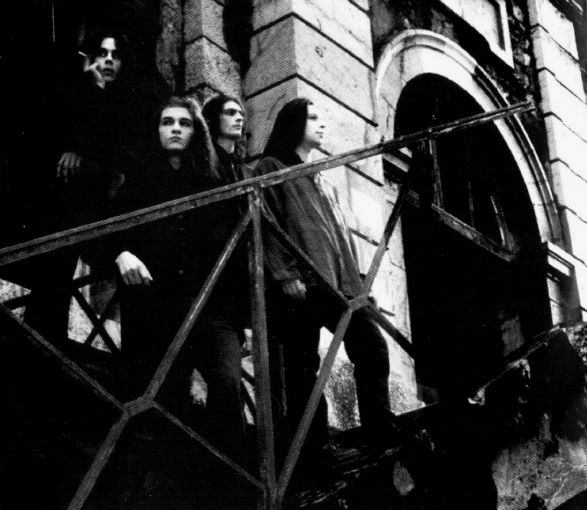

Forbidden Site - Photo


Je te sais proche de Hreidmarr (ex-Anorexia Nervosa) et il est vrai que vos deux groupes, chacun à leur manière, ont contribué à proposer un Black Metal différent du modèle scandinave. Plus littéraire, poétique, romantique. Quelles étaient vos relations avec Anorexia et qu'aviez vous en commun ?

À cette époque qui doit sembler aujourd’hui antédiluvienne, les musiciens de metal extrême s’échangeaient des démos cassettes de leur travail, parfois de très mauvaise qualité sonore, d’un bout à l’autre du monde. Nous répondions à des interviews pour des fanzines photocopiés vendus à l’entrée des concerts. Les groupes s’échangeaient leurs propres démos par courrier et naissaient parfois de longues correspondances papier, avec laïus métaphysique et cachet de cire. C’est ainsi que je fis la rencontre de Hreidmarr, par un échange de démo (il jouait alors dans Count Nosferatu). Nous nous rencontrâmes pour la première fois à Lyon, alors qu’il était venu assister à un concert de Cradle of Filth, dont nous assurions la première partie. Nous devînmes bons amis et n’avons d’ailleurs pas cessé de l’être. D’un point de vue historique, nous venons un peu avant Anorexia dont le succès et les albums studio arrivent en fait juste après la fin de Forbidden Site. Hreidmarr a toujours revendiqué sans scrupule l’importance de Forbidden Site parmi ses influences, puisque nous étions alors leurs aînés. Anorexia ayant commencé de rayonner vraiment après notre extinction, nous n’eûmes jamais l’occasion de partager une scène, en dépit de notre amitié, avec Hreidmarr puis le reste du groupe, et les convergences esthétiques nombreuses qui étaient les nôtres. C’est pour réparer cela que Hreidmarr nous proposa, en 2002, de remonter Forbidden Site pour un concert exceptionnel à la Locomotive (aujourd’hui La Machine), où nous pourrions enfin partager la même affiche. Ce qui fut fait, et clôtura pour nous l’histoire de Forbidden Site.
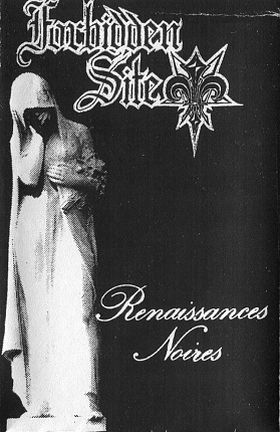
 Forbidden Site - Renaissances Noires

Finalement, que reste-t-il aujourd'hui de Forbidden Site, aussi bien pour toi en tant qu'individu qu'au niveau d'un héritage musical ?

Au niveau de l’héritage musical, ce n’est pas à moi de le dire et, sincèrement, je n’en sais rien. Il me semble toutefois qu’une certaine dimension poétique, romantique, littéraire, dans ce style, l’emploi de textes en français et d’une certaine mythologie française, tous ces éléments que nous avions initiés dans notre Black Metal ont fini par proliférer parmi les groupes nationaux. Pour le reste, la manière qui était la nôtre de nous jouer des codes et d’intégrer des influences assez diverses n’est pas la voie qui prédomine depuis. Cet éclectisme paraît typique de la seconde moitié des années 90. Personnellement, en revanche, je sais avec certitude que je dois énormément à cette expérience : une perception religieuse de l’art ; une quête permanente de l’éclat et de la transe ; un certain goût pour la provocation.
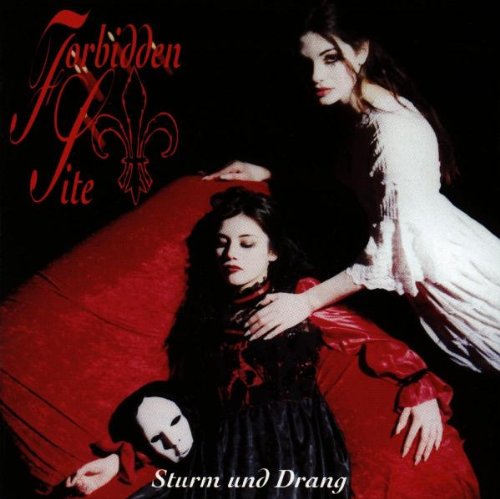
 Sturm und Drang : Forbidden Site: Amazon.fr: Musique

De ce Black Metal poétique et littéraire à la littérature à proprement parler il n'y avait qu'un pas, que tu franchis avec un premier livre au titre en forme de punchline, Suffirait-il d'aller gifler Jean d'Ormesson pour arranger un peu la gueule de la littérature française ?, mais que t'a-t-il fait ce pauvre D'Ormesson (paix a son âme) ?

À moi, directement, rien, mais son entrée dans la bibliothèque de la Pléiade me fit l’effet d’une profanation, d’autant que tout le monde savait très bien, à l’époque, les basses raisons commerciales qui avaient justifié cette aberration. Par ailleurs, il me semblait qu’entrer en littérature en allant défier un vieil académicien était une vieille et noble tradition française qui méritait d’être maintenue tout autant que l’excellence de la collection de prestige.

 Suffirait-il d'aller gifler Jean d'Ormesson pour arranger un peu ...

Tu as des convictions... Catholique, réactionnaire, monarchiste,  tu t'inscris dans la lignée d'auteurs comme Léon Bloy ou Barrès ?

J’apprécie beaucoup ces deux écrivains, mais je me sens davantage dans la lignée d’un Pierre Drieu la Rochelle (qui était barrésien, cela étant) et aussi d’un André Breton. Je me situe à nouveau à la croisée de deux traditions contraires, quoi qu’elles soient toutes deux issues du romantisme. Dans les termes d’un héritage plus direct, je me sens autant influencé par Richard Millet que par Antoine Volodine. Catholique et monarchiste, oui. « Réactionnaire », volontiers, s’il s’agit par là d’effrayer les autoproclamés « progressistes », mais en réalité, je me suis toujours vécu comme d’avant-garde. Et aujourd’hui plus que jamais.

Ton parcours me rappelle celui de Huysmans, ce passage des ténèbres romantiques à la conversion... Est-ce une de tes influences ?

Oui, parfaitement. J’ai été très marqué, adolescent, et à l’époque de Forbidden Site, d’ailleurs, par cette période artistique de la fin du XIXe siècle, dite symboliste ou décadente, ou les plus doués et les plus révolutionnaires des écrivains passent du nihilisme à l’occultisme et de l’occultisme à la conversion ou la reconversion au catholicisme, ce que Huysmans va incarner de la manière la plus tranchante, mais c’est aussi le cas d’un Barbey d’Aurévilly, d’un Villiers-de-l’Isle-Adam, d’un Bloy. Et tout cela était déjà mis en jeu et en lumière chez Baudelaire.

https://www.humanite.fr/sites/default/files/images/69128.HR.jpg
JK HUYSMANS : DE SATAN A JESUS


Tu sors l'excellent Les Verticaux en 2016... J'ai beaucoup apprécié ce roman, déjà parce qu'il devient rare de nos jours de lire un ouvrage de fiction bien écrit... et je te remercie pour ce plaisir... Tes personnages, Vincent, Lia et Emmanuel apparaissent comme des « Outsiders de luxe », des cathos monarchos plutôt révolutionnaires mais en version désabusée. Plutôt amateurs de la beauté du geste chevaleresque dans un monde qu'ils savent foutu... De qui es tu le plus proche ? Vincent, Emmanuel... Lia ?

De Vincent, puisque c’est lui le narrateur et celui qui se trouve dans la position de l’écrivain, même s’il est une version « distordue » de moi-même, évidemment, et que des éléments qui me sont essentiels sont incarnés par Emmanuel et Lia. D’une certaine manière, Vincent est un écrivain arrêté et dépressif qui, pour retrouver sa faculté de création, doit reconnecter la littérature avec la mystique et l’action, lesquelles sont représentées par Lia et Emmanuel. L’esprit, l’encre et le sang : voici l’équation à restaurer pour sortir du verbiage.
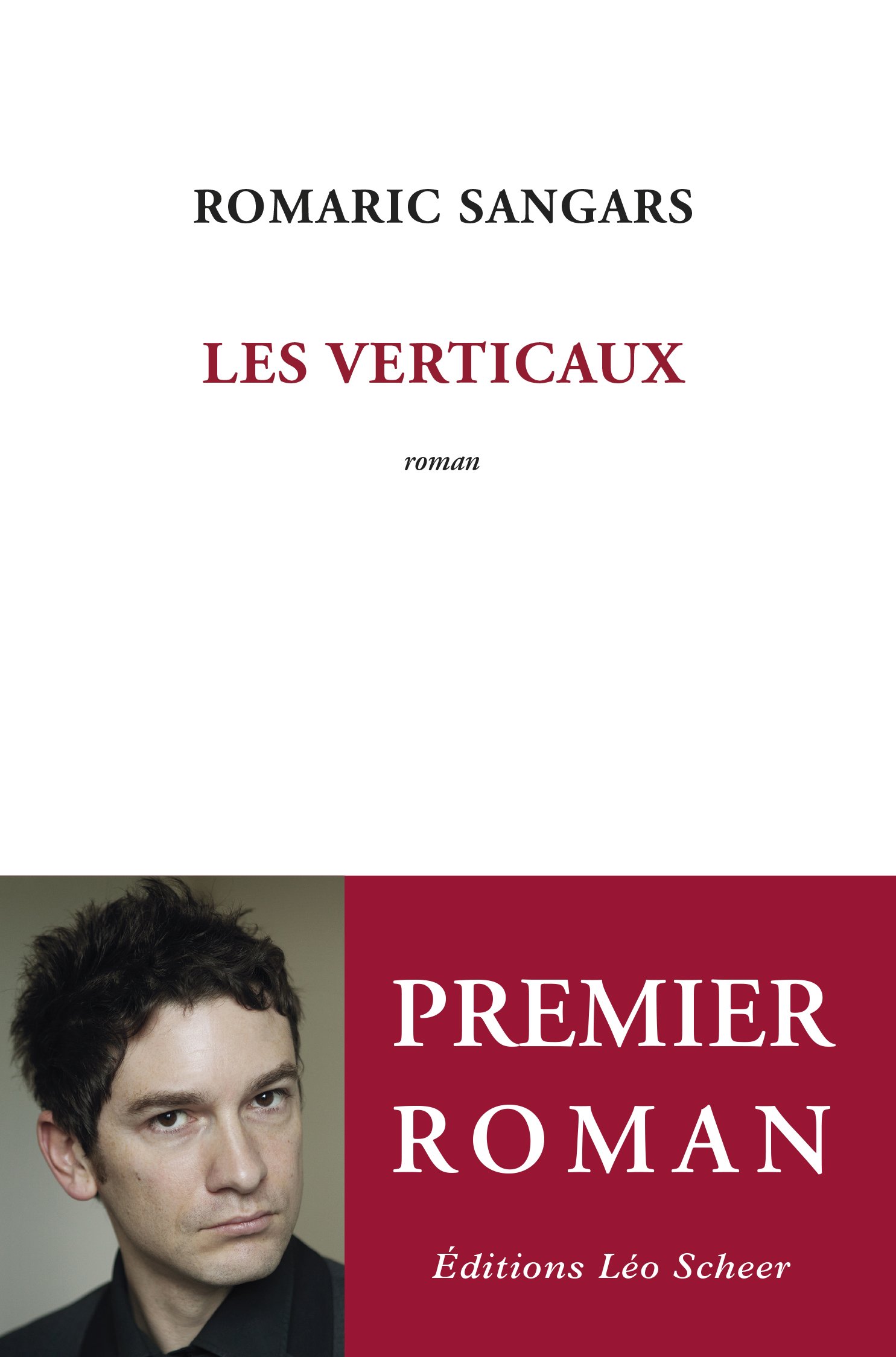

Amazon.fr - Les verticaux - Sangars, Romaric - Livres


Sous ses dehors romanesques ce livre est une critique acerbe de notre modernité dissolue, de cette pseudo-démocratie progressiste qui d'ailleurs tourne de plus en plus à l'autoritarisme d'extrême gauche, avec ces mouvements néo-féministes et intersectionnalistes intolérants et qui semblent paver le terrain du transhumanisme... Quelle est ta vision de ces mouvements, et jusqu'où penses-tu qu'ils peuvent aller en matière de nuisance ? Pour ma part j'avoue mon désarroi devant l'absence de courage intellectuel de la plupart en France face à ces Greta Thunberg et Adèle Haenel dictatrices !

Je vois là la résurgence des éternelles vieilles hérésies. Et plus précisément, à notre époque, et à propos des mouvements que tu cites, de l’hérésie cathare, c’est-à-dire de la gnose et du manichéisme. Selon la gnose, le monde n’a pas été créé par Dieu puis chuté, ce pourquoi il serait bon en soi mais devrait être réparé par l’action des hommes guidés par l’Esprit ; non, le monde matériel serait la création néfaste d’un mauvais démiurge destinée à prendre au piège les purs esprits que nous serions, si bien qu’il faudrait soit fuir hors du monde, soit le « dé-créer » en quelque sorte. C’est ce que veulent les transhumanistes et les prétendus mouvements d’émancipation à la mode. Quant à Greta, on croirait un gnome illuminé prêchant le retour à l’adoration de la terre-mère.

Tu as écrit Conversion en 2018. Je ne l'ai malheureusement pas encore lu mais je sais que tu y relates ta conversion au catholicisme... S'agissait il pour toi d'un retour aux racines familiales, à une éducation ou à quelque chose de complètement nouveau ?

Un peu des deux. Je n’avais pas été éduqué dans le catholicisme, mais nous n’en sommes pas moins tous, en France, si ce n’est chrétiens, du moins post-chrétiens, en outre, j’ai étudié dans un collège et un lycée catholiques. Néanmoins, contrairement aux vieilles hérésies qui resurgissent régulièrement, l’Esprit est toujours une nouveauté radicale.
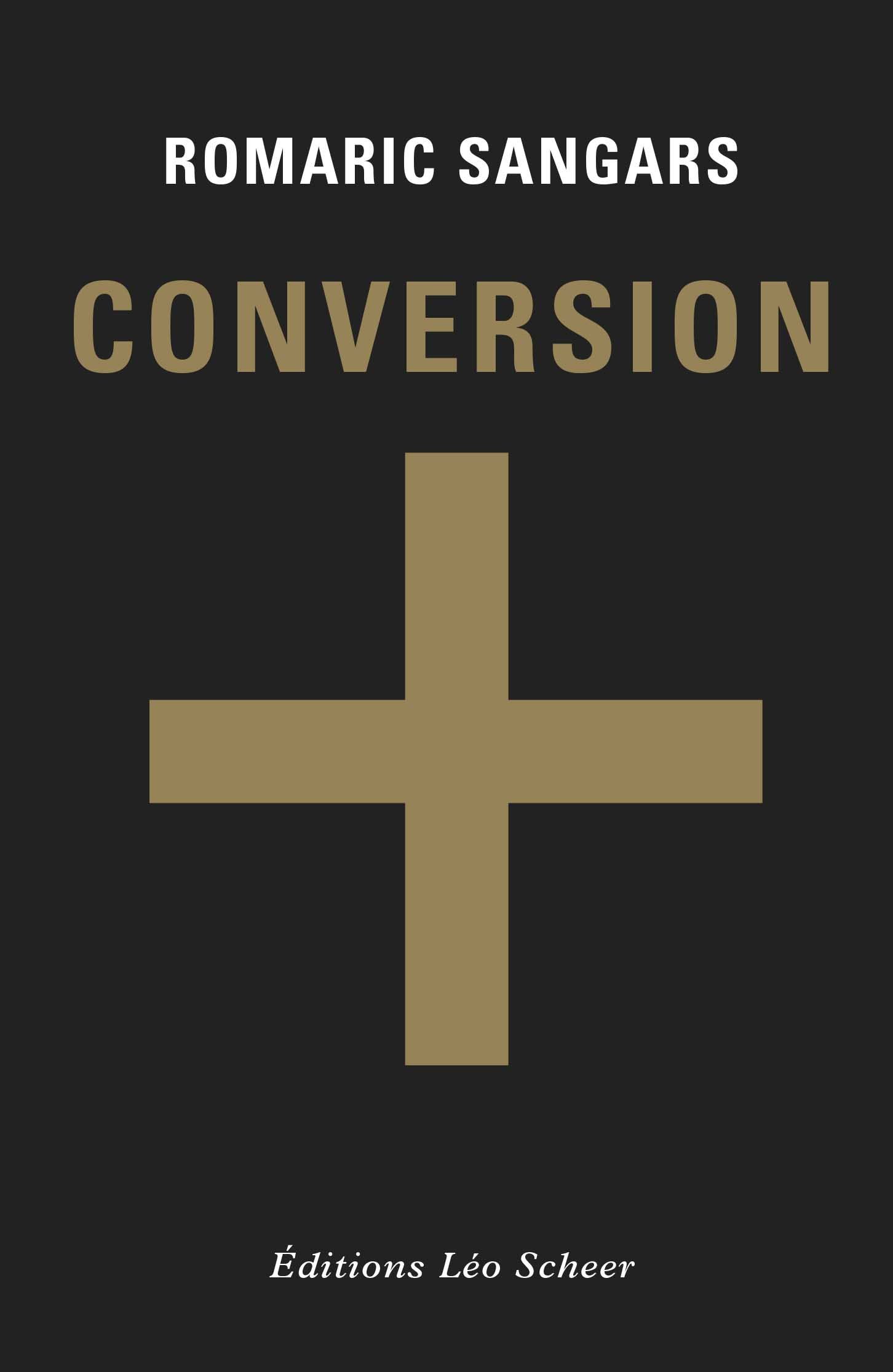
 Amazon.fr - Conversion - Sangars, Romaric - Livres

Que penses-tu des inégalités sociales en France ? Comment vois tu le fait que 10 millions de personnes soient pauvres dans un pays riche ?

C’est évidemment un triste état des choses. Cependant, à l’heure du capitalisme mondialisé et des migrations de masses, on importe des pauvres et on appauvrit les autochtones tout en accroissant la concentration des richesses au sein de structures transnationales. Donc poser la question au niveau national n’a pas grand sens.

Je me doute que tu n'es plus trop dans le « trip » Black Metal, et je sais que tu apprécies (comme moi) des groupes comme Coil, et d'autres, dans la mouvance industrielle. Peux tu nous parler de tes goûts actuels ? T'es tu déjà intéressé à des groupes de BM chrétien comme Horde, Antestor, Crimson Moonlight ?

Non, j’avoue n’avoir jamais écouté ces groupes. En ce moment, j’écoute Laake, jeune prodige français de l’électro-piano, un mouvement initié en Allemagne tout à fait passionnant. J’aime aussi beaucoup Arvö Pärt et sa musique dépouillée et mystique. Et j’ai aussi récemment découvert Sextile, un groupe allemand d’electro-clash à l’esprit farouchement punk, qui aurait malheureusement cessé ses activités.
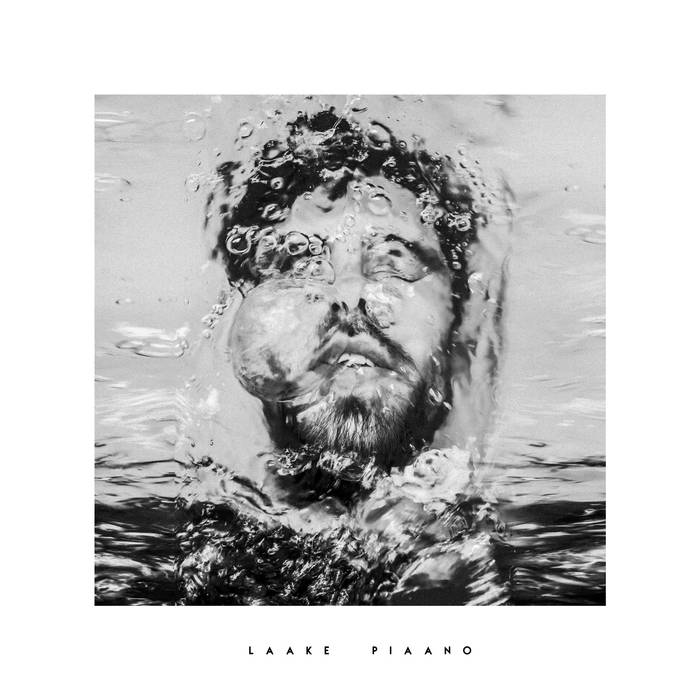
 laake piano

Ton prochain livre ?

Il gravite autour du Graal et de l’imaginaire arthurien. J’ai plongé dans l’infraconscient européen. Puisque tout est ébranlé, j’ai souhaité revenir à la source. Je compte, évidemment, alcooliser le geyser.

Tu n'es pas seulement écrivain, mais tu travailles aussi dans la presse écrite… Après être passé par Chronic'art, Causeur, tu es aujourd'hui rédacteur en chef de la section culture du magazine L'incorrect. Peux tu nous raconter ce cheminement journalistique ? En quoi correspond-il à tes idéaux ?

Chronic’art était un magazine très novateur pour la première décennie des années 2000 et où je me sentais totalement libre d’écrire ce que je voulais. Cela m’a permis de découvrir la littérature de mon époque, de rencontrer les écrivains que j’admirais, de nouer avec certains de belles amitiés. J’ai toujours pratiqué la critique littéraire dans une perspective de créateur. J’observais les formes que mes contemporains proposaient pour dire leur temps. Dans Causeur, je me suis fait davantage éditorialiste. C’était, et c’est toujours, une belle nébuleuse où sont passées toutes les jeunes plumes anti-politiquement correctes de l’époque. L’Incorrect, c’est mon ami Jacques de Guillebon qui en est le directeur de rédaction, et pour moi, la responsabilité est plus grande et également plus excitante, puisque je dirige les pages culture et qu’il s’agit, dans tous les domaines, de défendre ce qui nous paraît artistiquement pertinent et d’attaquer les fausses valeurs.
l'incorrect 

Envisagerais tu de refaire de la musique un jour ?

J’ai un projet en germe, en tout cas, même si mes projets littéraires et mes activités ne me laissent pas suffisamment le temps de m’en occuper pour l’instant. Cela s’intitulerait « No Seppuku In September ». Ce serait un projet à la fois piano-voix minimaliste et électro plus expérimental. Beaucoup de mélancolie et de chaos. Mais je ne sais pas comment et quand cela se formalisera.

Tes lectures du moment ?

Le cycle arthurien à la suite de Chrétien de Troyes, puisqu’il s’agit du thème du livre que j’écris. Le recueil de poèmes Une Terre où trembler de mon amie Hélène Fresnel. Mais une femme russe qui me fascine m’intime de lire Le Maître et Marguerite, chef-d’œuvre de Boulgakov, et je ne pense pas résister longtemps à cette injonction.

 Chrétien de Troyes — Wikipédia

Si Romaric Sangars était une citation, ou un proverbe ?

French poetry’s not dead.

À toi de conclure comme tu le souhaites :

Merci pour ce long entretien, qui me donne cependant l’étrange sensation du temps qui passe ! Puisse Dieu sauver quelque chose de nos secondes furieuses perdues dans l’éternité.

Armoiries royales du Royaume-Uni — Wikipédia

What a fascinating path that the one of Romaric Sangars...Since the 90's when he played in one of the most original French Black Metal bands, Forbidden Site, until today and his pen put at the service of both beautiful pieces of literature and magazines related to art and culture, but also to opinions (L'incorrect), he never stopped working against the general aberbity that invades us. So, while some illiterate people are pricking themselves with history by unbolting statues where Jimi Hendrix's statue will be tagged as a "collaborator" of white people, it is high time to rebuild our intellectual and literary health. Romaric's books contribute greatly to this. Don't let idiocracy spoil your life, keep listening to music, but grab books and ideas. Interview with the interested party...


Romaric Sangars, catholique romain du IIIe millénaire - Causeur

"A music group meant much more than an artistic project, but rather a kind of sect, a mystical fringe that had to declare war on the rest of the world" (Romaric Sangars)
Hello Romaric, and thank you for answering my questions. We're going to start this interview by talking about the cult Black Metal band you were in in the 90's. Forbidden Site. Can you tell us a little bit about how the band was formed and what you wanted to do with it ?

The band, at least its creative principle, was really born out of my meeting with Arnault Destal on December 31, 1993. I had just started a metal band with some high school friends, whose orientations were still very undefined, we were doing covers in my parents' garage and we were missing a drummer. Arnault had been pointed out to me by a musician friend of mine that we had in common. From then on, there was an obvious chemistry between us. Arnault was immediately very enthusiastic when I showed him my compositions and brought me some lyrics, like the idea of the band's name. He was a bit older, two years my senior, which at 16 is significant, and was already very initiated to the strangest and most radical genres of extreme metal, which were then enjoying a great boiling. Producing a unique synthesis, that's what our artistic ambition was rather quickly. It's also true that at that age and given the genres in question, and also, I would add, the times we lived in, a band meant much more than an artistic project, but rather a kind of cult, a mystical fringe that had to declare war on the rest of the world.

You released your first demo in 1994, in the middle of the Scandinavian Black Metal wave. Can you tell us about this first release?

Our first real demo remains for me Black Rebirths, which was released in '96. The 94 demo, Catharsis, is still a maturing phase for the band. We hadn't yet digested our influences. They were more popular genres at the time, like doom metal from My Dying Bride or Paradise Lost, Cathedral's first album; there was also doom death from Malta or Austria at that time. We were fans of Godsend, also Norwegian doom. There were occasional echoes of trash death. Then came Black Metal, indeed, we converted to it as much through Burzum, Dark Throne, Immortal, Satyricon, Mayhem, as Samael. And it's this genre, just arrived from Scandinavia, that guided us from then on as our main reference. We immediately grasped, I think, the unique subversive aura that emanated from it. And at least in our region of France, we were the first to claim this style and to use its codes.

forbidden site demo

You're going to stand out with a Black Metal with frankly gothic accents. What were the bands, authors and currents that influenced you at the time to go in this direction?

As I said, Black Metal was a very recent and radical subdivision of the big international "metal" tree. We were also marked by other influences and our project was to propose our own synthesis, rather than copying what was already there. It was out of the question for us to literally copy the Norwegians and it seemed very provincial to us, as an attitude, to pose to the rune-clad sons of Vikings when we were descended from the French, a people who, moreover, had nothing to envy to any other in terms of military victories as well as artistic feats. Since young Norwegians who had broken away from the French claimed their pagan roots in a music that was blacker and more aggressive than ever, we were going to brandish the French genius in its most exalted romantic relief: Ars Gallica; which implied a certain theatricality and an alternation of idealism and melancholy that could be compared, indeed, to Gothic music. This being the case, from our point of view, we elaborated an alloy of Black metal and Doom metal in a French perspective but with great formal freedom. It seems to me that since then, Black Metal has gained a kind of hegemony and is often very codified. This was not the context in which we were evolving.

 Forbidden Site - Photo

I know you're close to Hreidmarr (ex-Anorexia Nervosa) and it's true that your two bands, each in their own way, contributed to propose a Black Metal different from the Scandinavian model. More literary, poetic, romantic. What was your relationship with Anorexia and what did you have in common?

At that time, which must seem antediluvian nowadays, extreme metal musicians exchanged demo tapes of their work, sometimes of very bad sound quality, from one end of the world to the other. We were answering interviews for photocopied fanzines sold at the entrance of the concerts. The bands exchanged their own demos by mail and sometimes there were long paper correspondence, with metaphysical laity and wax seals. That's how I met Hreidmarr, through a demo exchange (he was then playing in Count Nosferatu). We met for the first time in Lyon, when he came to a Cradle of Filth concert, where we were opening for him. We became good friends and have remained good friends ever since. From a historical point of view, we come a bit before Anorexia, whose success and studio albums actually came just after the end of Forbidden Site. Hreidmarr has always unscrupulously claimed the importance of Forbidden Site among his influences, since we were their elders at the time. Anorexia having started to really shine after our extinction, we never had the opportunity to share a stage, despite our friendship, first with Hreidmarr and then with the rest of the band, and the many aesthetic convergences that were ours. It's to fix this that Hreidmarr proposed us, in 2002, to remount Forbidden Site for an exceptional concert at La Locomotive (now La Machine), where we could finally share the same bill. This was done, and closed the story of Forbidden Site for us.

 Forbidden Site - Renaissances Noires

Finally, what remains of Forbidden Site today, both for you as an individual and as a musical legacy?

In terms of musical heritage, it's not for me to say, and frankly, I don't know. However, it seems to me that a certain poetic, romantic, literary dimension, in this style, the use of French lyrics and a certain French mythology, all these elements that we had initiated in our Black Metal ended up proliferating among the national bands. As for the rest, the way we used to play with codes and to integrate various influences is not the predominant way since then. This eclecticism seems typical of the second half of the 90s. Personally, however, I know for sure that I owe a great deal to this experience: a religious perception of art; a permanent quest for brilliance and trance; a certain taste for provocation.

Sturm und Drang : Forbidden Site: Amazon.fr: Musique

From this poetic and literary Black Metal to literature strictly speaking, there was only one step, that you take with a first book with a punchline-shaped title, would it be enough to go and slap Jean d'Ormesson to fix a little the face of French literature?, but what did poor D'Ormesson (peace be upon him) do to you?

Directly to me, nothing, but his entry into the Pleiades library was a desecration, especially since everyone knew very well, at the time, the low commercial reasons that had justified this aberration. Moreover, it seemed to me that entering literature by challenging an old academician was an old and noble French tradition that deserved to be maintained just as much as the excellence of the prestigious collection.

Suffirait-il d'aller gifler Jean d'Ormesson pour arranger un peu ...

You have convictions... Catholic, reactionary, monarchist, do you subscribe to the line of authors like Léon Bloy or Barrès?

I appreciate these two writers very much, but I feel more in the line of a Pierre Drieu la Rochelle (who was a Barresian, that being said) and also of an André Breton. Once again, I'm at the crossroads of two opposing traditions, though both of them are from Romanticism. In terms of a more direct heritage, I feel as much influenced by Richard Millet as by Antoine Volodine. Catholic and monarchist, yes." Reactionary", willingly, if that's meant to scare the self-proclaimed "progressive", but in reality I've always lived as an avant-garde. And today more than ever.

Your journey reminds me of Huysmans, that passage from romantic darkness to conversion... Is it one of your influences?

Yes. Yes, it is. As a teenager, and during the Forbidden Site era, I was very much influenced by this artistic period at the end of the 19th century, known as Symbolist or decadent, where the most gifted and revolutionary writers go from nihilism to the occult and from the occult to conversion or reconversion to Catholicism, which Huysmans will embody in the sharpest way, but it is also the case of a Barbey d'Aurévilly, a Villiers-de-l'Isle-Adam, a Bloy. And all this was already in play and in the spotlight in Baudelaire's work.

 https://www.humanite.fr/sites/default/files/images/69128.HR.jpg

You release the excellent Les Verticaux in 2016... I enjoyed this novel very much, already because it is becoming rare nowadays to read a well-written work of fiction... and I thank you for this pleasure... Your characters, Vincent, Lia and Emmanuel appear as "Luxury Outsiders", catholic monarchists rather revolutionary but in a disillusioned version. Rather amateurs of the beauty of the chivalrous gesture in a world they know they are screwed... Who are you closest to? Vincent, Emmanuel... Lia?

To Vincent, since he is the narrator and the one in the writer's position, even if he is a "distorted" version of myself, obviously, and elements that are essential to me are embodied by Emmanuel and Lia. In a way, Vincent is an arrested and depressed writer who, in order to regain his creative faculty, must reconnect literature with mysticism and action, which are represented by Lia and Emmanuel. Mind, ink and blood: this is the equation to be restored to get out of the verbiage.

Amazon.fr - Les verticaux - Sangars, Romaric - Livres 

Beneath its romantic exterior, this book is a sharp criticism of our dissolute modernity, of this progressive pseudo-democracy which, moreover, is turning more and more to extreme left-wing authoritarianism, with these intolerant neo-feminist and intersectionalist movements which seem to be paving the way for transhumanism . What is your vision of these movements, and how far do you think they can go in terms of nuisance? For my part, I confess my dismay at the lack of intellectual courage of most people in France in the face of these dictatorial Greta Thunberg and Adèle Haenel!

I see here the resurgence of the eternal old heresies. And more precisely, in our time, and in relation to the movements you mention, the Cathar heresy, that is to say Gnosis and Manichaeism. According to Gnosis, the world was not created by God and then fallen, which is why it would be good in itself but should be repaired by the action of men guided by the Spirit; no, the material world would be the harmful creation of an evil demiurge destined to trap the pure spirits that we would be, so that we would have to either flee from the world or "de-create" it in some way. This is what the transhumanists and the so-called fashionable emancipation movements want. As for Greta, she is like an enlightened gnome preaching the return to the worship of mother earth.

You wrote Conversion in 2018. Unfortunately, I have not yet read it, but I know that you relate your conversion to Catholicism in it... Was it for you a return to your family roots, an education or something completely new?

A bit of both. I had not been educated in Catholicism, but we are all, in France, if not Christians, at least post-Christians, and besides, I studied in a Catholic college and high school. Nevertheless, contrary to the old heresies that regularly resurface, the Spirit is always a radical novelty.

 Amazon.fr - Conversion - Sangars, Romaric - Livres

What do you think of the social inequalities in France? How do you see the fact that 10 million people are poor in a rich country?

It is obviously a sad state of affairs. However, in the age of globalized capitalism and mass migration, the poor are being imported and the natives are being impoverished, while at the same time increasing the concentration of wealth within transnational structures. So asking the question at the national level does not make much sense.

I know that you're not really into the Black Metal trip anymore, and I know that you like (as I do) bands like Coil, and others in the industrial movement. Can you tell us about your current tastes ? Have you ever been interested in Christian BM bands like Horde, Antestor, Crimson Moonlight ?

No, I confess I've never listened to those bands. At the moment I'm listening to Laake, a young French electro-piano prodigy, a very exciting movement started in Germany. I also really like Arvö Pärt and his simple, mystical music. And I also recently discovered Sextile, a German electro-clash band with a fiercely punk spirit, which has unfortunately ceased its activities.

 laake piano

Your next book?

It revolves around the Grail and the Arthurian imagination. I plunged into the European infraconscious. Since everything is shaken, I wanted to go back to the source. I intend, of course, to liquefy the geyser.

You're not only a writer, but you also work in the written press... After having worked for Chronic'art, Causeur, you are now editor-in-chief of the culture section of L'incorrect magazine. Can you tell us about this journalistic path? How does it correspond to your ideals?

Chronic'art was a very innovative magazine for the first decade of the 2000s, where I felt totally free to write whatever I wanted. It allowed me to discover the literature of my time, to meet the writers I admired, to make some beautiful friendships. I have always practiced literary criticism from a creative perspective. I observed the forms that my contemporaries proposed to tell their time. In Causeur, I became more of an editorialist. It was, and still is, a beautiful nebula where all the young, anti-political correctness of the time went through. L'Incorrect is my friend Jacques de Guillebon who is the managing editor, and for me, the responsibility is greater and also more exciting, since I direct the culture pages and it is a question, in all areas, of defending what seems to us artistically relevant and attacking false values.

 l'incorrect

Would you consider making music again one day?


I have a project in the making, in any case, even if my literary projects and activities don't leave me enough time to deal with it for the moment. It would be called "No Seppuku In September". It would be both a minimalist piano-vocal project and a more experimental electro project. A lot of melancholy and chaos. But I don't know how and when it will be formalized.


What are you reading at the moment?

The Arthurian cycle following Chrétien de Troyes, since that's the theme of the book I'm writing. The collection of poems Une Terre où trembler by my friend Hélène Fresnel. But a Russian woman who fascinates me intimately to read The Master and Margarita, Bulgakov's masterpiece, and I don't think I can resist this injunction for long.

Chrétien de Troyes — Wikipédia

What if Romaric Sangars was a quote, or a proverb?

French poetry's not dead.

It's up to you to conclude as you wish:

Thank you for the long interview, which does give me a strange feeling of time passing! May God save something of our furious seconds lost in eternity.


LES ARTICLES LES PLUS CONSULTES

INTERVIEW WITH VINDSVAL : THE LAST ONE - FR + ENGLISH TEXT - BLUT AUS NORD/YERUSELEM

Chronique - Livre - Olivier Déhenne - Premières Fois - Nouvelles - Eros & Thanatos réunifiés - L'Age d'Homme - Collection Contemporains 2019

NICOLAS CLAUX - Interview - Put The Fun In Funeral - Français + English Text - Murderabilia/Peinture/Ecriture - Le Scribe Du Rock

LES PLUS VUS

Nouvelle Interview/New Interview - NON SERVIAM/HIVERLUCIDE/BIOLLANTE : Anarchy In The Dark ! - Texte Français/English text

INTERVIEW WITH VINDSVAL : THE LAST ONE - FR + ENGLISH TEXT - BLUT AUS NORD/YERUSELEM

New Interview - MARGARET KILLJOY, Writer and Musician - Anarchist Queer Black Metal and Litterature - English/Français - Le Scribe Du Rock - Pierre Avril

Pourquoi William Sheller est-il génial ?

Fées, Punk, Black Metal et retour a l'enfance : NUIT NOIRE en interview - Fr/english

Jours Pâles : Interview avec Asphodèle, et à propos de Malenuit - Audrey Sylvain - Fr/Eng